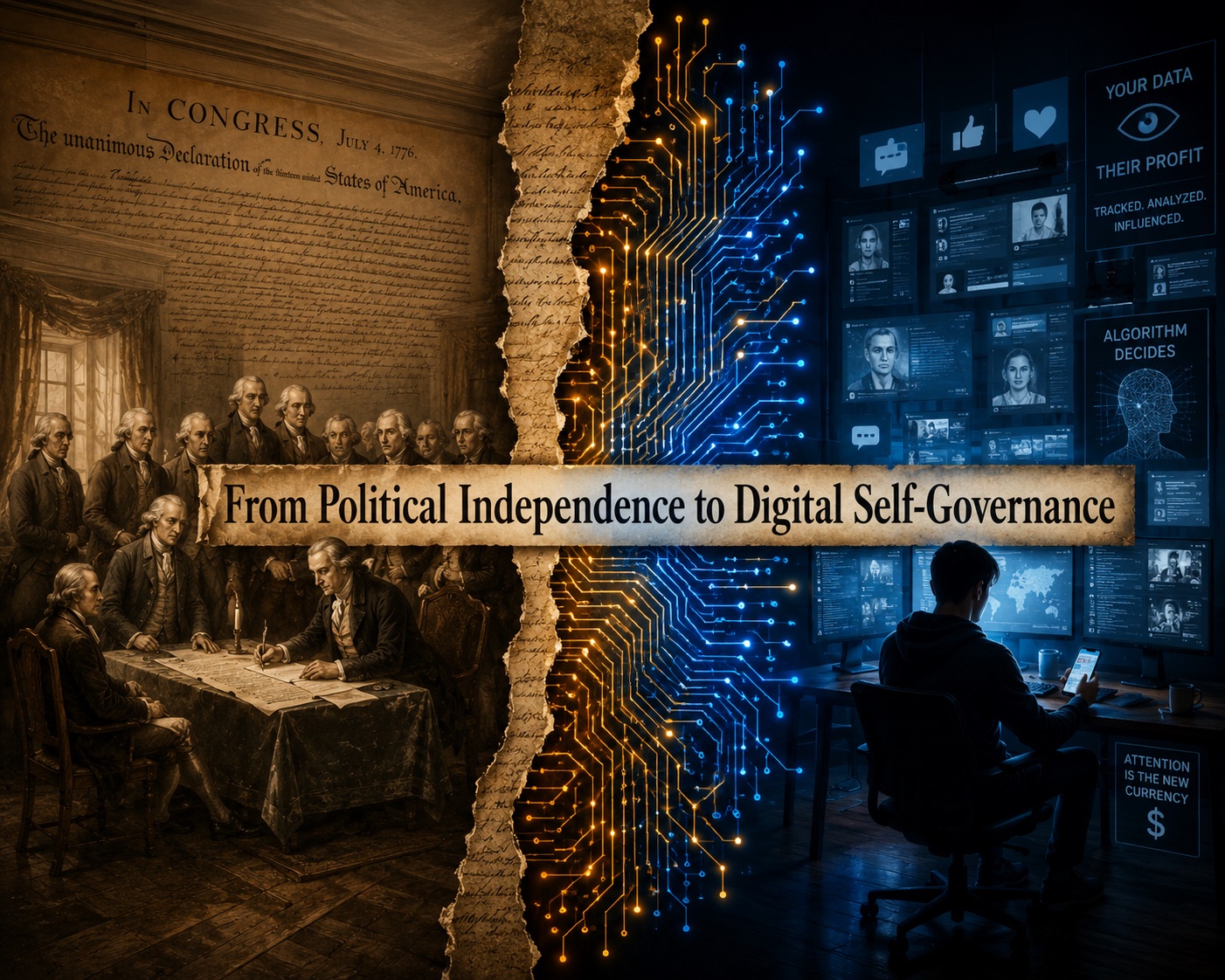
When the Declaration of Independence was written in 1776, the central conflict was between human beings and a distant power that claimed authority over their lives without their consent. The colonists argued that the British monarchy had become too powerful, too unaccountable, and too willing to violate basic rights. They were not merely complaining about taxes or individual laws; they were challenging a system in which ordinary people were governed by forces they could not meaningfully control. The Declaration responded by insisting that human beings possess natural rights, and that any system of power becomes illegitimate when it violates those rights.
Today, the conflict between human beings and technology products, especially those powered by artificial intelligence, raises a similar question: what happens when powerful systems shape people’s lives without transparency, meaningful consent, or accountability?
In the eighteenth century, power was exercised through kings, parliaments, soldiers, and colonial officials. In the modern world, power is increasingly exercised through algorithms, data systems, surveillance tools, automated decisions, and digital platforms. These systems are embedded in the services and devices people rely on every day, including phones, laptops, search engines, social media, financial systems, communication networks, and impact our shopping, workplaces, schools, and government services. Technology does not merely assist society; the design of today’s technology products increasingly governs it.
Networked systems now influence what information and products people see, whether they qualify for jobs, loans, housing, health care, insurance, or public benefits, and how they are watched, categorized, and judged. They operate through hidden infrastructures that evade the reach of existing laws and regulations designed to protect people from unfairness, discrimination, exploitation, and abuse.
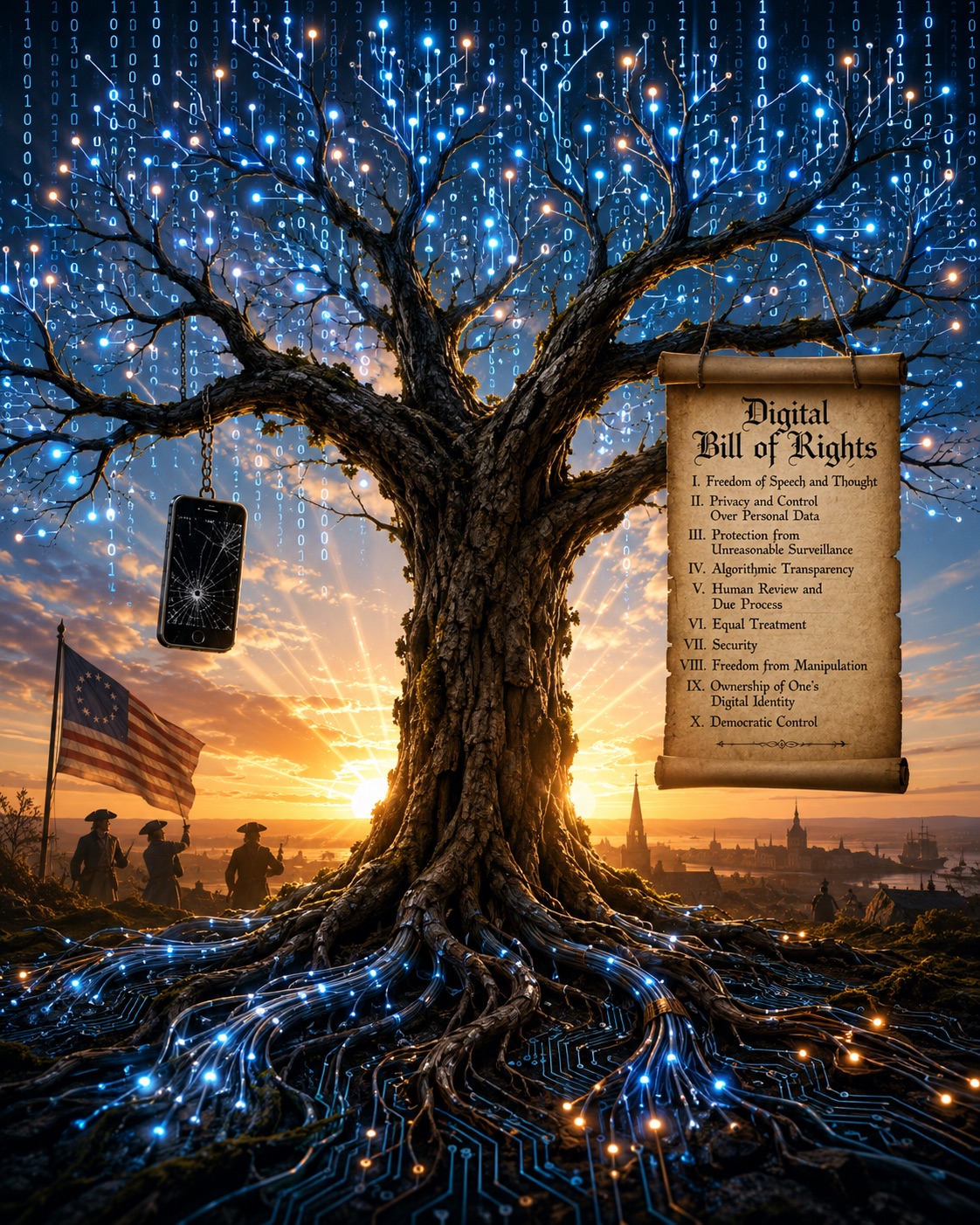
The parallel is not that technology is the same as monarchy. Technology itself is not a king. But both settings involve a struggle over power. Today’s technology products are rapidly pushing democracy toward a kind of technocracy, in which the design choices of digital systems dictate the rules people live by. The Declaration of Independence challenged political power that ruled over people without respecting their rights. Today, society must challenge technological power when it operates without respecting human dignity, privacy, equality, freedom, and due process. We need a declaration for the age of technology, accompanied by a Digital Bill of Rights.
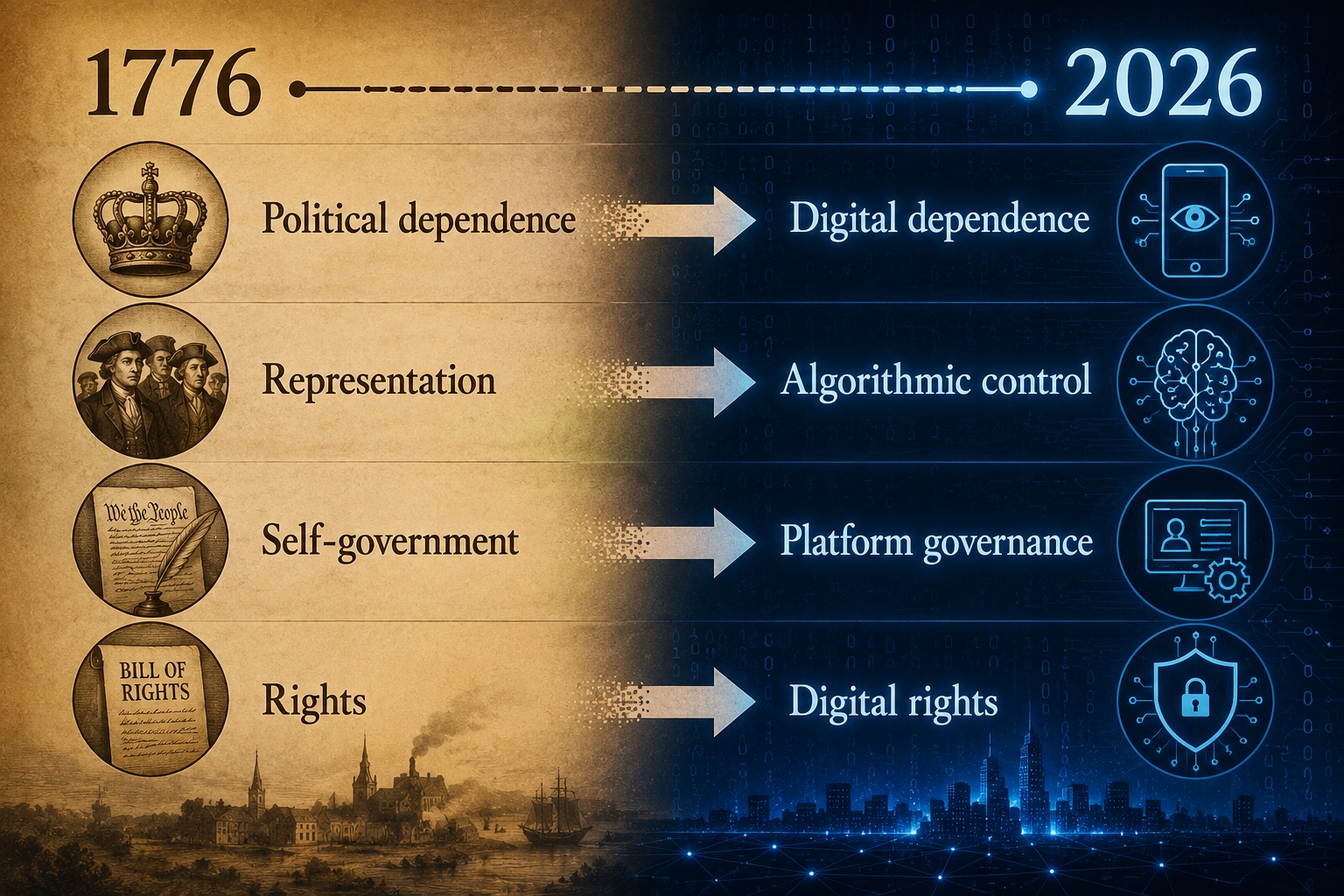
The Declaration of Independence states that governments are created to secure rights, not to destroy them. That idea applies to technology products as well. Artificial intelligence and digital systems should exist to serve human beings, not to control, exploit, or replace human judgment without accountability.
When technology products improve medicine, expands access to knowledge, helps people communicate, or solves public problems, they strengthen human freedom and well-being. But when they invade privacy, spread misinformation, reinforce discrimination, manipulate behavior, or make life-changing decisions without explanation, they resemble the unchecked power the Declaration warned against.
The Bill of Rights adds another layer to this comparison. The First Amendment protects speech, religion, assembly, and the right to challenge authority. In today’s digital society, those rights are not present in the design of technology products. Social media platforms influence public debate, and algorithms amplify already powerful voices while burying vulnerable ones. This distorts the meaning of free speech by making expression depend not only on the right to speak, but also on whether digital systems allow that speech to be heard. Surveillance, data tracking, online harassment, and facial recognition also chill protest and political expression.
The Fourth Amendment protects people against unreasonable searches and seizures, a principle that connects directly to modern concerns about data collection, facial recognition, location tracking, biometric identification, and government and corporate surveillance. In the digital age, a person’s phone, search history, messages, purchases, and movements reveal more about them than any one-time physical search ever could.
The Fifth and Sixth Amendments emphasize due process and fair treatment, which are essential when automated systems make decisions about policing, sentencing, welfare, hiring, education, credit, or health care. No person should be judged, excluded, or punished by an algorithm without a meaningful chance to understand and challenge the outcome.
In both the founding era and the present, the central issue is whether human beings remain in control of the systems that govern them. The Declaration of Independence argued that people have the right to resist power that becomes destructive of their rights. In the age of artificial intelligence, that principle is urgent. A society that values liberty must ensure that technology is transparent, accountable, fair, and guided by human rights. Just as the founders demanded that the government derive its legitimacy from the consent of the governed, society must demand that technology derive its legitimacy from its service to humans.